Let’s be honest – most of us have hundreds of travel photos sitting in Instagram archives that we’ll probably never look at again. We post, we get the likes, and then the algorithm moves on. So do we.
But here’s the problem: those posts don’t really capture what the trip felt like. They don’t remind you of the sound of that market at dawn or how you felt standing at the edge of something beautiful for the first time.
Social platforms are great for sharing in the moment, but they’re not designed for you. They’re designed for engagement metrics. Your post from two years ago is buried so deep you’d need an archaeological dig to find it.
When you document travel in other ways, you own those memories. They’re not subject to platform changes or account issues. And honestly? The process of creating something tangible makes you pay closer attention while you’re actually there.
If you want travel memories that actually stick around, it might be time to think beyond the feed. Here’s how to do it!
1. Keep a Handwritten Travel Journal
View this post on Instagram
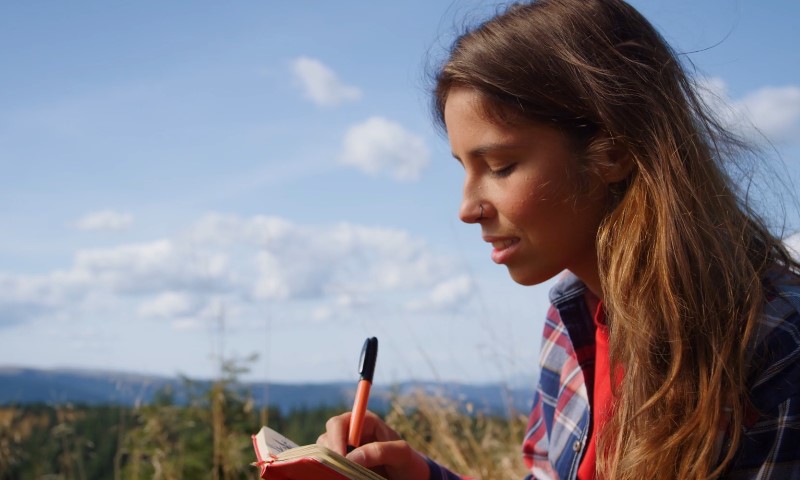
There’s something about putting pen to paper that forces you to slow down. You don’t need to write essays – just a few sentences each day about what you saw, ate, or felt. Years later, your own handwriting will transport you back faster than any photo could.
A handwritten journal creates focus. Paper resists speed. Thought gains weight. Short entries still hold value. Memory favors effort.
Key reasons paper works better than digital notes:
- Physical motion reinforces recall
- Imperfection adds emotional context
- Review feels intentional rather than casual
Try this: Jot down one thing that surprised you each day. Those unexpected moments are usually the ones worth remembering.
Surprise sharpens awareness. Contrast anchors recall. A missed bus. A sudden smell. A quiet street. A journal keeps attention alert even on routine days.
2. Create a Personal Photo Calendar
Instead of letting your photos live on a hard drive forever, turn the best ones into something functional. When you create a personal photo calendar, you get to see a different travel memory every month – right there on your wall or desk. It’s one of those simple ideas that actually works because you can’t ignore something you look at daily.
A calendar imposes limits. One image must represent an entire place. Selection demands clarity. Memory improves through choice rather than volume.
Daily exposure matters. Repeated sight reinforces recall. Routine days gain context. Travel stops feel distant. Travel becomes part of ordinary time rather than an archive.
3. Build a Physical Scrapbook
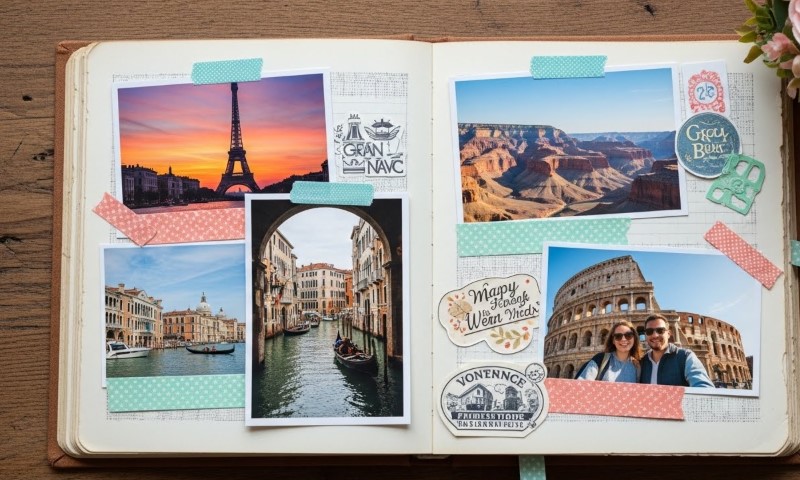
Old school? Maybe. Effective? Absolutely. Collect ticket stubs, receipts from meals you loved, little maps, and postcards. Glue them in alongside photos and notes. The tactile experience of flipping through a scrapbook hits different than scrolling.
Scrapbooks reward touch. Pages slow pace. Hands guide recall. Imperfect layouts feel honest. Wear adds history.
Physical memory relies on touch and spatial awareness. Research in cognitive psychology links tactile interaction with stronger episodic recall.
A scrapbook allows disorder. Crooked alignment feels natural. Mixed textures add depth. A receipt tells more than a caption. A crease holds time.
Screens flatten experience. Paper preserves nuance. Scrapbooks favor presence over perfection.
4. Record Voice Memos
Your future self will thank you for this one. Record the sounds around you – a busy street, live music, waves – and add a few words about where you are and how you’re feeling. These audio snapshots are surprisingly powerful memory triggers.
Sound restores place fast. Noise sets pace. Silence marks space. Tone reveals mood.
Did you know?
Auditory cues activate memory recall faster than visual cues in many people. Sound often bypasses conscious analysis.
Voice preserves honesty. Fatigue sounds real. Joy sounds unfiltered. Excitement carries rhythm.
Short clips work best. Ten seconds hold context. Labels help later recall. Sound captures atmosphere that photos miss entirely.
5. Send Postcards to Yourself

Write a quick note to your home address from each destination. When you get back, you’ll have a little collection of messages from past-you, complete with local stamps and postmarks. It’s like receiving mail from your own adventure.
Postcards arrive late. Delay adds charm. Distance adds warmth.
Benefits worth note:
- Postmarks confirm place and time
- Handwritten tone feels immediate
- Physical arrival extends memory
Thought feels honest on a postcard. Space limits ramble. Words gain clarity.
A mailbox moment restores travel long after return. Each card marks presence rather than proof. Travel speaks quietly through paper and ink.
6. Start a Private Travel Blog
You don’t need an audience for this. Set up a simple site or even a private document where you write longer reflections about your trips. Unlike social posts, you can go as deep as you want without worrying about character limits or whether it’s “engaging” enough.
Private space removes pressure. Honesty gains room. Reflection replaces performance.
Private reflection improves long-term recall by link between narrative structure and memory storage.
Long entries reveal patterns. Preferences surface. Repeated habits appear.
A private log values depth over reaction. Thought matures. Memory gains structure. Travel turns inward rather than outward.
7. Create Photo Books by Trip
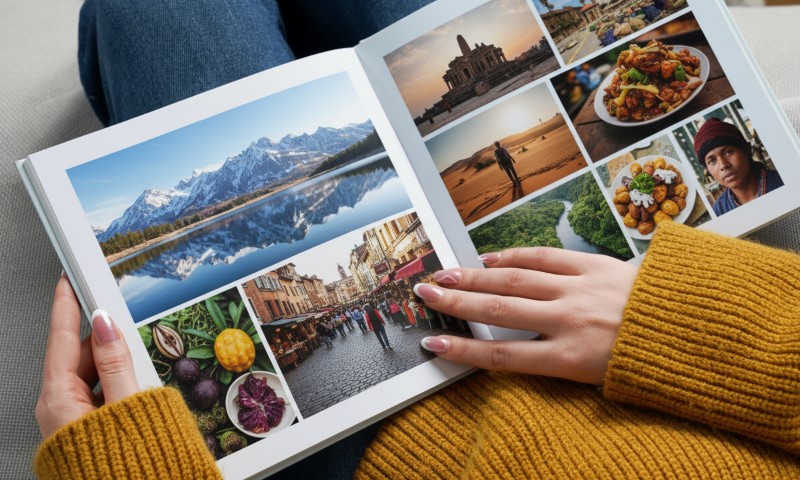
Instead of one massive camera roll, organize your best shots into dedicated photo books for each journey. This forces you to curate – picking only the images that really capture the experience – and gives you something physical to share with friends and family.
| Book focus | Purpose |
| Highlights | Emotion |
| Details | Context |
| Scenes | Atmosphere |
Curation sharpens memory. Fewer images hold more meaning. Choice removes noise.
Books invite sharing. Stories flow beside pages. Conversation lasts longer. Screens fade fast. Paper stays present.
A finished book signals closure. Travel gains form rather than overflow.
8. Make a Travel Playlist
Music and memory are closely linked. Create a playlist of songs you heard, discovered, or just associate with each trip. Hit play months later and you’ll be mentally transported right back.
Music anchors emotion. Rhythm marks time. Lyrics attach to place.
Did you know?
Music links strongly with autobiographical memory due to activation of emotional centers in the brain.
One song restores mood fast. Another restores place. Recall feels instant.
A playlist acts as a memory switch. Headphones replace distance. Sound bridges time without effort.
9. Collect One Meaningful Item Per Destination
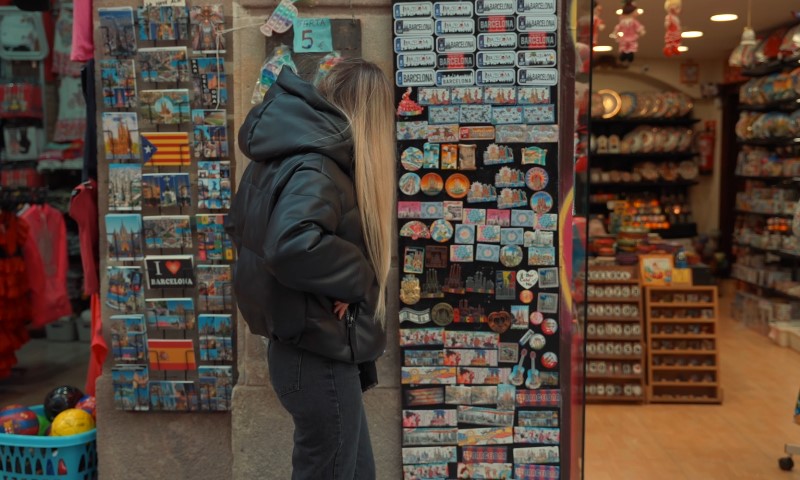
Skip the generic souvenirs. Instead, pick up one small, meaningful object from each place – a stone from a beach, a small piece of local art, a menu from your favorite restaurant. Display them together at home and you’ve got a personal museum of your travels.
Meaning beats quantity. Choice adds value.
Strong item traits:
- Local origin
- Personal context
- Modest size
A collection tells story without labels. Each item recalls a moment. Each object confirms presence.
Display builds continuity. Memory stays visible. Travel lives beyond storage through daily sight.
Making Documentation a Habit
The biggest challenge isn’t knowing what to do – it’s actually doing it consistently. Here are some ways to make it stick:
- Set aside 10 minutes at the end of each travel day. Write a few lines, organize photos, or record a voice memo before you sleep.
- Keep supplies accessible. A small journal in your day bag means you’ll actually use it.
- Don’t aim for perfection. Messy notes and blurry candid shots often become the most treasured items later.
- Combine methods. A journal with a few pasted photos and ticket stubs is more interesting than any single approach alone.
If you’re someone who enjoys planning trips, applying that same energy to documenting them makes sense. Whether you’re mapping out a backpacking adventure or a simple weekend getaway, the memories deserve the same level of attention.
Your Memories Deserve More Than a Feed
Instagram has its place. But your best travel experiences deserve to be captured in ways that last – ways that don’t depend on algorithms or app updates.
Pick one or two ideas from this list and try them on your next trip. You might be surprised how much richer your memories become when you take the time to document them properly.
Your future self will scroll past thousands of forgotten posts. But they’ll hold onto that journal, that photo book, that playlist.
Make something worth keeping.

Hello, my name is Harper Barton. The only thing I love more than travelling is writing about it. Sounds strange doesn’t it? But yeah, I adore writing and sharing my experiences about what I have experienced during my travels. Since I am a person who loves being a part of the community, I often write about local festivals with the goal of popularizing outside just small communities they come from.