
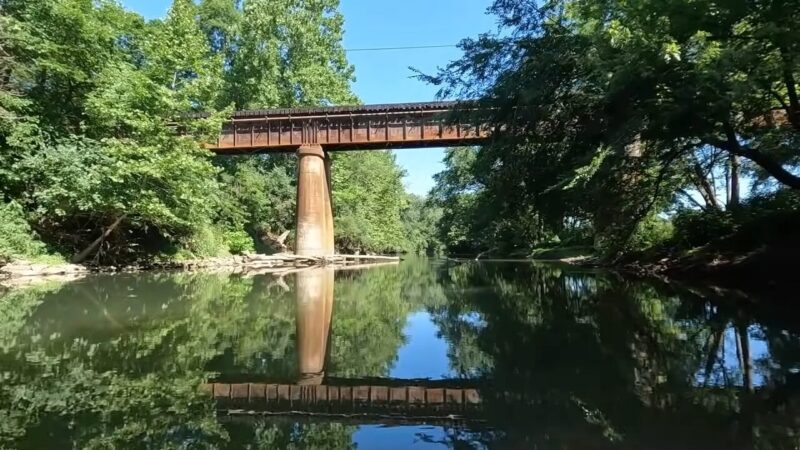
Kayaking along the Ohio River opens access to more than 300 miles of paddle-friendly water stretching past Appalachian wilderness, historic river towns, and major cities such as Cincinnati and Louisville.
Recognition as a National Water Trail places this river among premier long-distance paddling destinations in the United States.
Paddlers encounter calm backwaters, wide open channels, and working river traffic that tells a story of commerce and migration. Short day outings work well near urban centers, while multi-day trips reward those seeking distance and solitude.
History, nature, and adventure move together along every bend of the river.
Why Kayak the Ohio River?

Kayak travel on the Ohio River offers constant change in scenery and experience as miles unfold.
Key reasons paddlers return year after year include:
- Forested shorelines alternating with broad open water and city skylines
- Historic river towns that grew alongside steamboat trade
- Routes connected to Lewis and Clark and Underground Railroad crossings
- Notable features such as Meldahl Locks, which allow paddlers to pass through with care
- Protected waters within Ohio River Islands National Wildlife Refuge
- Falls of the Ohio near Louisville, an area requiring avoidance unless using McAlpine Locks
Each section presents a different pace and mood, shifting naturally between quiet stretches and active river corridors.
Best Kayaking Routes on the Ohio River
Ohio River Way provides mapped segments and an interactive planning tool that includes real-time barge traffic tracking.
Segment planning remains essential due to distance, current, and access spacing.
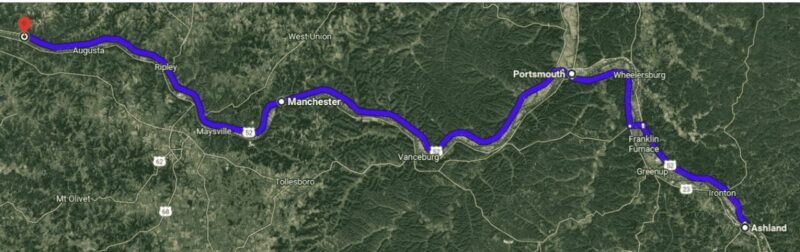
Ashland to Portsmouth
Ashland marks the beginning of the 308-mile Ohio River Way trail. Appalachian foothills line both banks, creating a feeling of distance and quiet rarely found on large rivers.
Wildlife sightings remain common, and boat traffic stays relatively light.
Portsmouth to Manchester
Portsmouth to Manchester earns a reputation as the wildest stretch of the river.
Long reaches pass wooded islands and protected refuge waters. Ohio River Islands National Wildlife Refuge offers opportunities for rest, wildlife observation, and overnight stops where permitted.
Manchester to Chilo
Manchester to Chilo signals a gradual shift toward river towns and community access points. Maysville, Ripley, and Augusta welcome paddlers with restored riverfronts, parks, and walkable downtowns.
Main streets run close to the water, making resupply and rest straightforward.
Chilo to New Richmond
History becomes visible between Chilo and New Richmond. Chilo Lock House 34, preserved as a museum, recalls earlier navigation eras. Meldahl Locks allow paddlers to pass through under controlled conditions, offering a rare lock-through experience on a major river.
Cincinnati and Northern Kentucky
Urban paddling defines Cincinnati and Northern Kentucky.
Skyline views rise directly ahead while bridges, stadiums, and river traffic frame the waterway. Paddlefest, held annually, brings thousands of participants and ranks as the largest paddling event in the nation.
Tributaries such as Little Miami River and Mill Creek provide quieter alternatives near the city.
Gilday to Madison
Gilday to Madison introduces scenic side trips into tributaries including Tanners Creek, Hogan Creek, and Laughery Creek.
Long stretches between Warsaw and Madison feel remote, with Bethlehem serving as the only reliable launch or take-out in that section. Careful planning becomes critical due to limited access.
Best Time to Paddle the Ohio River
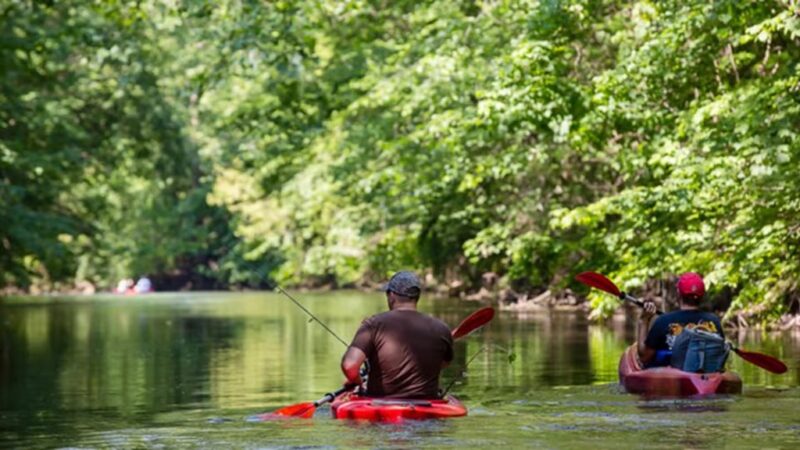
Seasonal timing shapes both conditions and experience.
Spring to early summer, spanning April through June, brings higher water levels due to rainfall.
Cooler temperatures require proper clothing, and outfitter services begin operating during this period.
Mid-summer through fall, running July through October, offers warmer water and calmer conditions.
Beginner paddlers and families often prefer this window. Autumn paddling rewards visitors with colorful foliage along the banks.
Early reservations help secure outfitters and lodging during peak demand.
Falls of the Ohio near Louisville requires special caution. Paddling near or downstream of this area demands use of McAlpine Locks as a mandatory detour. For those staging trips or storing gear nearby, Old Bardstown Rd storage NSA Storage offers climate-controlled storage just a short drive from the river.
Popular Launch Spots and Access Points
Ohio River Way segment planning identifies reliable access locations that support both day trips and longer itineraries.
Commonly used launches and take-outs include:
- Ashland
- Manchester
- Chilo
- New Richmond\
- Cincinnati Public Landing
- Lawrenceburg
- Warsaw
- Madison\
- Westport
Urban access remains easiest at Cincinnati Public Landing and New Richmond. Smaller towns such as Augusta and Ripley offer upgraded riverfronts with ramps, parking, and nearby amenities.
Interactive mapping tools assist with logistics and barge traffic awareness during planning.
Safety Tips for Kayaking on the Ohio River
Large river paddling demands planning, discipline, and constant attention to changing conditions.
Wide channels, commercial traffic, and fast-moving water create risks not always present on small rivers or lakes.
Proper preparation greatly reduces those risks and allows paddlers to respond calmly when conditions shift.
Essential Gear
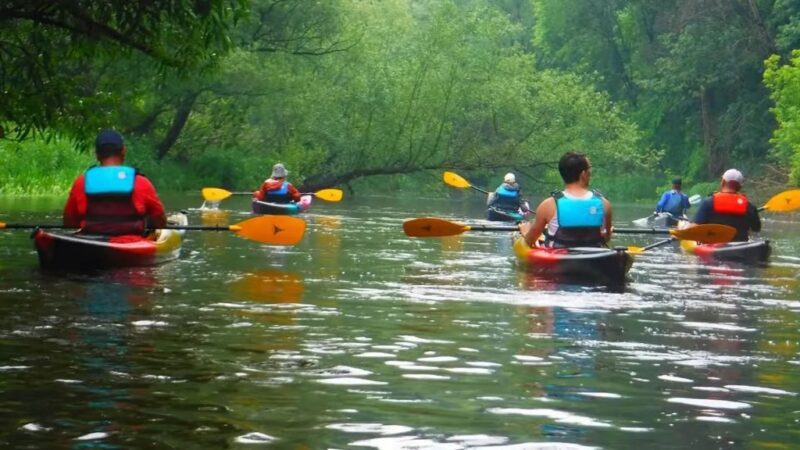
Personal flotation devices remain the single most important piece of safety equipment on the Ohio River.
Wearing a life jacket at all times dramatically increases survival chances during capsizes, collisions, or sudden immersion.
Essential gear for Ohio River paddling includes:
- Coast Guard-approved PFDs worn at all times, not stored in the boat
- Cold-water clothing such as wool, neoprene, or polypropylene to retain heat when wet
- Extra clothing sealed inside waterproof bags for post-immersion recovery
- Sturdy footwear such as wading shoes or sneakers paired with wool socks to protect feet during launches, landings, and portages
Cold water and strong current leave little margin for error. Data consistently shows a majority of fatal incidents involve paddlers who were not wearing life jackets at the time of the accident.
Environmental Awareness
Weather conditions on large rivers can change rapidly, especially in open sections where wind travels unobstructed across wide water.
Careful monitoring of forecasts helps paddlers avoid dangerous situations before launching.
Key environmental safety considerations include:
- Checking weather forecasts immediately before departure and again during multi-day trips
- Avoiding paddling after heavy rainfall, which increases current speed and floating debris
- Learning to recognize low-head dams and avoiding them completely
- Preparing for cold-water immersion by controlling breathing and protecting airways after a capsize
Cold water shock can overwhelm even strong swimmers. Sudden immersion may trigger involuntary gasping, loss of muscle control, or cardiac stress within seconds.
River Hazards
Ohio River hazards range from natural obstacles to large-scale commercial traffic. Awareness and anticipation help paddlers avoid situations that escalate quickly.
Common hazards include:
- Strainers such as fallen trees or submerged branches that trap boats and bodies against current
- Faster current near dams, locks, bridge pilings, and river constrictions
- Commercial barges that move quietly but require long distances to stop or turn
- Recreational motorboats creating wake that destabilizes small craft
Commercial traffic always has limited maneuverability. Visibility, predictable movement, and early avoidance protect paddlers sharing the channel.
Best Practices
Experienced paddlers rely on habits developed through repetition and discipline. Simple decisions made early often prevent emergencies later.
Recommended practices include:
- Paddling with at least one partner and filing a float plan with a trusted contact
- Scouting unfamiliar sections, access points, and hazards before committing
- Avoiding ropes tied to bodies, boats, or other paddlers
- Staying upstream of a capsized boat to prevent pinning against obstacles
- Kneeling in moving water to improve stability and boat control
- Leaning toward obstructions instead of away to maintain balance
Preparation, awareness, and calm decision-making shape outcomes during unexpected events on the river.
Closing Thoughts
Kayaking on the Ohio River delivers a wide range of experiences shaped by geography, history, and water conditions. Thoughtful planning, respect for hazards, and use of local resources support safe and rewarding trips.
Day paddles near cities coexist with long-distance routes through quiet stretches. Eagles circle island refuges, historic locks open passage, and river towns provide rest and connection along the way.
Ohio River paddling rewards preparation with moments that stay memorable long after reaching shore.

Hello, my name is Harper Barton. The only thing I love more than travelling is writing about it. Sounds strange doesn’t it? But yeah, I adore writing and sharing my experiences about what I have experienced during my travels. Since I am a person who loves being a part of the community, I often write about local festivals with the goal of popularizing outside just small communities they come from.