
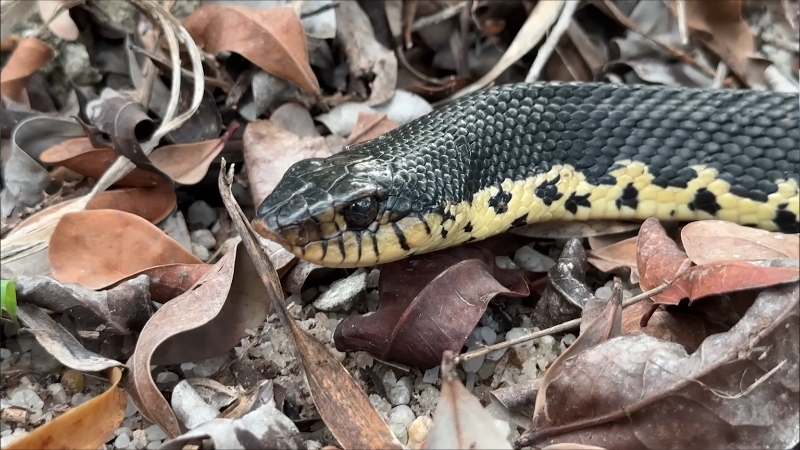
Montana is home to 10 native snake species, only one of which is venomous. The plains, river valleys, forests, badlands, and mountain foothills across the state support a mix of garter snakes, racers, gopher snakes, and the prairie rattlesnake.
Most Montana snakes are harmless, non-aggressive, and play a critical ecological role by controlling rodent and insect populations. This guide explains exactly which snake species live in Montana, where they are found, how common they are, how to identify them accurately, and what role they play in the state’s ecosystems.
Montana’s snake diversity is modest compared to southern or coastal states, largely because of colder winters, high elevations, and shorter active seasons. Snakes in Montana are typically active from April through October, depending on elevation and annual weather patterns.
Most species hibernate communally in underground dens known as hibernacula, often returning to the same sites year after year.
Snake Family
Number of Species
Venomous
Colubridae (garter, racers, gopher snakes)
9
No
Viperidae (rattlesnakes)
1
Yes
Total
10
1
Prairie Rattlesnake (Crotalus viridis)
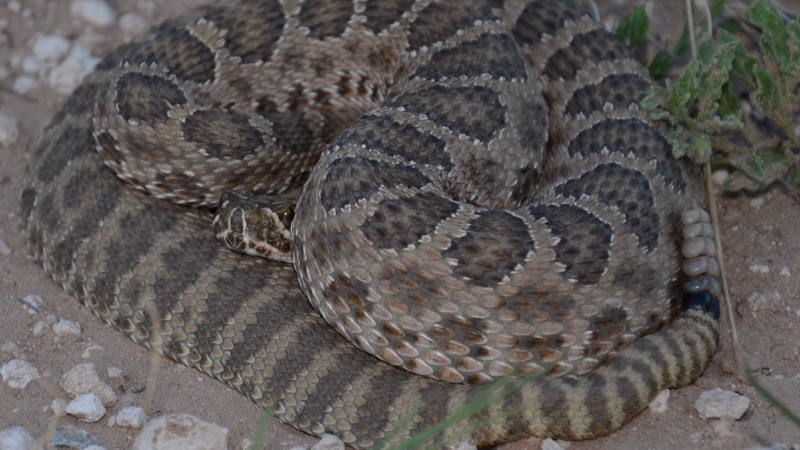
The prairie rattlesnake is the only venomous snake native to Montana. Its range covers most of the eastern two-thirds of the state, where open grasslands, eroded badlands, rocky coulees, and river breaks provide suitable basking and denning sites.
Adult prairie rattlesnakes usually measure 30 to 45 inches, with a heavy-bodied build, a clearly triangular head, vertical pupils, and a segmented rattle used as a warning signal.
Despite widespread fear, this species is defensive rather than aggressive. Bites almost always occur when the snake is stepped on unexpectedly or intentionally handled.
Montana records fewer than five rattlesnake bites per year on average, and fatalities are extremely rare due to modern antivenom availability and rapid medical response.
Feature
Details
Venom Type
Hemotoxic
Venomous
Yes
Typical Habitat
Grasslands, badlands, rocky slopes
Average Length
30–45 inches
Active Season
April–October
Conservation Status
Secure
Plains Garter Snake (Thamnophis radix)
The plains garter snake is among the most widespread and frequently encountered snakes in Montana, particularly near wetlands, irrigation canals, streams, and riverbanks.
It is easily identified by a yellow or orange dorsal stripe running down a dark brown or black body. Adults generally measure 20 to 30 inches.
This species feeds primarily on amphibians, earthworms, and small fish. It is non-venomous and completely harmless to humans. Plains garter snakes are often mistaken for rattlesnakes, but they lack a rattle, triangular head, and vertical pupils, making correct identification straightforward.
Feature
Details
Venomous
No
Range
Statewide
Typical Habitat
Wetlands, streams, and irrigation ditches
Average Length
20–30 inches
Primary Diet
Frogs, worms, small fish
Temperament
Docile
Common Garter Snake (Thamnophis sirtalis)
View this post on Instagram
Closely related to the plains garter snake, the common garter snake is highly adaptable and thrives in both rural and semi-urban environments. In Montana, it is commonly observed near ponds, lakes, marshes, and riparian corridors.
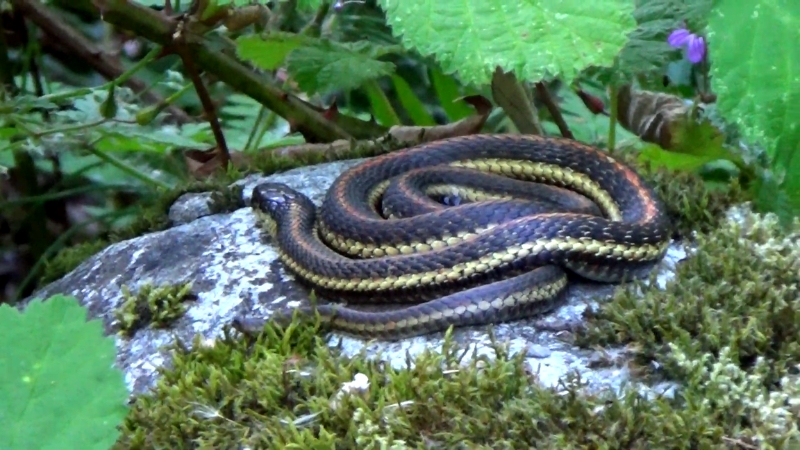
Coloration varies widely, but most individuals display three light stripes on a darker background.
This species tolerates cooler temperatures better than many other snakes, which helps explain its broad northern distribution. Like most Montana snakes, it gives live birth rather than laying eggs, an adaptation that improves reproductive success in colder climates.
Feature
Details
Venomous
No
Range
Statewide
Typical Habitat
Ponds, lakes, riparian areas
Reproduction
Live birth
Cold Tolerance
High
Human Risk
None
Terrestrial Garter Snake (Thamnophis elegans)
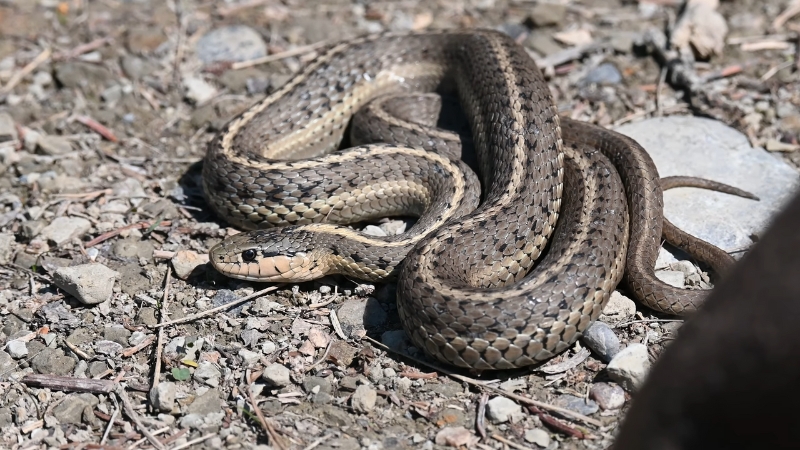
The terrestrial garter snake prefers drier habitats than other garter species and is frequently found in grasslands, sagebrush steppe, forest edges, and foothills. It is one of Montana’s most visually variable snakes, with individuals ranging from boldly striped to nearly patternless.
This adaptability allows the species to occupy a wide range of elevations and environmental conditions. Like other garter snakes, it is non-venomous and beneficial, feeding on insects, amphibians, and small vertebrates.
Feature
Details
Venomous
No
Preferred Habitat
Grasslands, sagebrush, forest edges
Appearance
Highly variable
Elevation Range
Plains to foothills
Ecological Role
Predator of small prey
Human Risk
None
Bullsnake / Gopher Snake (Pituophis catenifer)
@theherpwhisperer Pacific Gopher snakes (Pituophis catenifer) and nonvenomous colubrid snakes that I think are so cute despite their tendency to try and trick you in to thinking they are rattlers #gophersnake #snake #colubrid #pituophis #snakes #reptiles #herpingcalifornia #herpetology #animals #wildlife #nature ♬ El niño – DjeuhDjoah & Lieutenant Nicholson
The bullsnake, also known as the gopher snake, is Montana’s largest snake, with some individuals exceeding six feet in length. It is often mistaken for a rattlesnake because it can flatten its head, hiss loudly, and vibrate its tail when threatened.
Bullsnakes are powerful constrictors that feed primarily on rodents, including ground squirrels and pocket gophers. Their role in natural rodent control makes them ecologically valuable, especially in agricultural areas.
They are non-venomous and protected under Montana wildlife regulations.
Feature
Details
Venomous
No
Average Length
4–6+ feet
Typical Habitat
Grasslands, farmland, open plains
Primary Diet
Rodents
Defensive Behavior
Hissing, tail vibration
Conservation Status
Secure
Western Racer (Coluber constrictor)
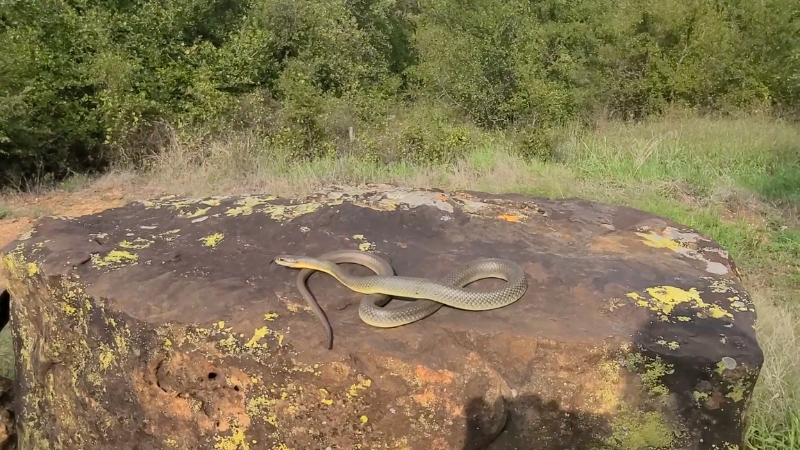
The western racer is a slender, fast-moving snake found mainly in southern and eastern Montana. Adults are typically solid blue-gray or olive, while juveniles display blotched patterns that fade as they mature.
This species relies on speed rather than venom or constriction. It is active during daylight hours and feeds on insects, rodents, birds, and other reptiles. Western racers are alert and shy, usually fleeing immediately when approached.
Feature
Details
Venomous
No
Activity Pattern
Diurnal
Typical Habitat
Open plains, shrublands
Adult Coloration
Blue-gray or olive
Hunting Strategy
Speed and pursuit
Human Risk
None
Western Hognose Snake (Heterodon nasicus)
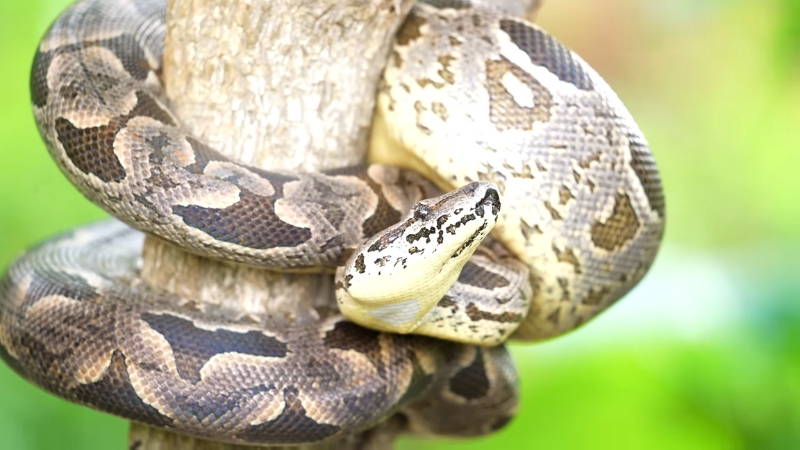
The western hognose snake is one of Montana’s most distinctive-looking species, easily recognized by its upturned snout used for digging in sandy soils. It is relatively uncommon and primarily restricted to the southeastern part of the state.
When threatened, this snake is known for exaggerated defensive displays, including flattening its neck, hissing, and even playing dead. Despite these behaviors, it is harmless to humans.
Feature
Details
Venomous
No
Key Identifier
Upturned snout
Range in Montana
Southeastern regions
Typical Habitat
Sandy grasslands
Defense Behavior
Bluff displays, death-feigning
Human Risk
None
Smooth Green Snake (Opheodrys vernalis)
Smooth Green Snake (Opheodrys vernalis)!! This little fella was a surprise for our @EagleEyeTours group as we strolled along a Grand Manan trail this afternoon. What an awesome critter, and one of many highlights on this tour so far!#OffTheRock #NatureRocks #KowaOptics pic.twitter.com/C16rppzgcU
— Jared Clarke (@birdtherock) August 21, 2021
The smooth green snake is small, slender, and bright green, making it one of the most visually striking reptiles in Montana. It prefers moist grasslands, meadows, and forest clearings and feeds almost entirely on insects and spiders.
Because of its reliance on undisturbed habitats and invertebrate prey, this species is sensitive to pesticide use and habitat fragmentation.
Feature
Details
Venomous
No
Coloration
Bright green
Typical Habitat
Meadows, moist grasslands
Primary Diet
Insects, spiders
Sensitivity
High
Conservation Concern
Localized
Rubber Boa (Charina bottae)
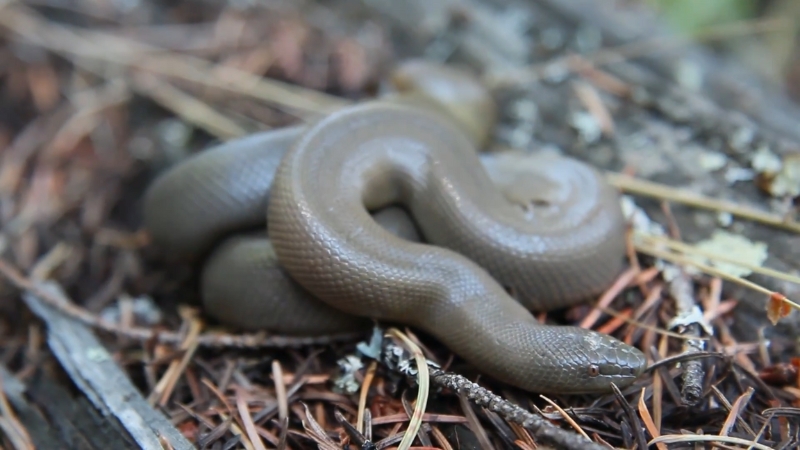
The rubber boa is Montana’s most cold-tolerant snake and one of its most unusual. It has a blunt head, small eyes, and smooth, rubbery skin that gives the species its name. Rubber boas are slow-moving, secretive, and mostly nocturnal.
They occur primarily in western Montana forests and are known for feeding on small mammals, including nestling rodents. Their gentle nature makes them one of the least defensive snakes in the state.
Feature
Details
Venomous
No
Range
Western Montana
Typical Habitat
Forested areas
Activity Pattern
Nocturnal
Skin Texture
Smooth, rubbery
Diet
Small mammals
Western Terrestrial Nightsnake (Hypsiglena chlorophaea)
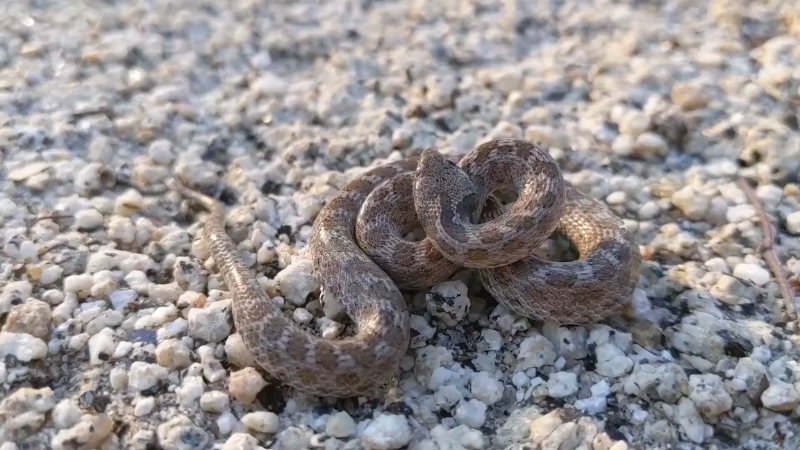
The western terrestrial nightsnake is rare and poorly documented in Montana, with confirmed records mostly from southern regions. It is small, nocturnal, and mildly venomous to its prey, but completely harmless to humans.
Because of its secretive habits and nighttime activity, encounters with people are uncommon.
Feature
Details
Venomous
Mild (prey only)
Human Risk
None
Activity Pattern
Nocturnal
Size
Small
Range in Montana
Southern regions
Encounter Frequency
Rare
Where People Most Often Encounter Snakes in Montana
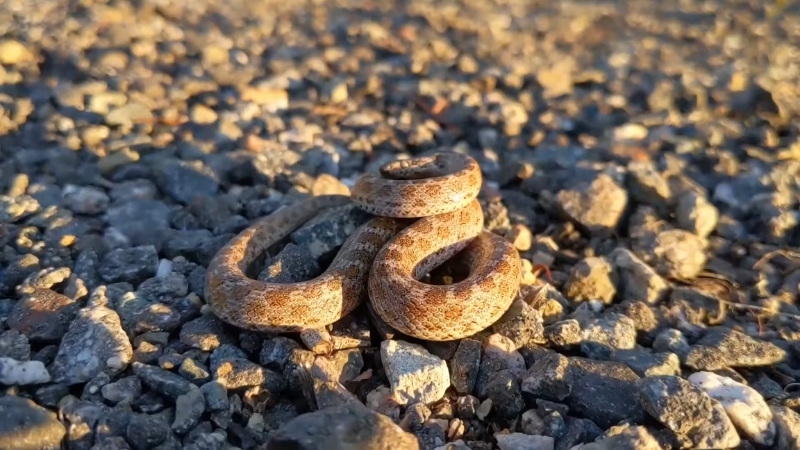
Most human-snake encounters occur near water sources, rocky outcrops, hiking trails, and rural properties. Late spring and early fall see increased activity as snakes migrate between feeding areas and hibernation sites.
Conservation Status and Legal Protection
All native snakes in Montana are protected under state wildlife regulations. While not all species are classified as threatened, habitat loss, road mortality, and persecution remain concerns.
Species
Conservation Status in Montana
Prairie Rattlesnake
Secure
Bullsnake
Secure
Rubber Boa
Species of Concern (local)
Smooth Green Snake
Species of Concern
Others
Secure
Why Snakes Matter Ecologically
Snakes play a measurable role in rodent population control, disease regulation, and food web stability.
Studies across the northern Great Plains show that areas with intact snake populations experience lower vole and mouse densities, which directly benefits agriculture and reduces the spread of rodent-borne diseases.
Removing snakes from ecosystems often leads to imbalances that require human intervention, such as increased pesticide use.
Final Perspective
Montana’s native snakes are diverse, ecologically important, and overwhelmingly harmless.
Understanding which species live in the state, how to identify them correctly, and where they fit into the ecosystem reduces fear and prevents unnecessary killing.
With only one venomous species and clear physical differences between snakes, informed coexistence is both practical and realistic in Montana’s landscapes.

I’m Annabel, and traveling has always been my passion. My idea of fun? A lot of biking and hiking. From the Himalayas to the local hills, if there’s a path (or not), I’ve probably been there or it’s on my list.