
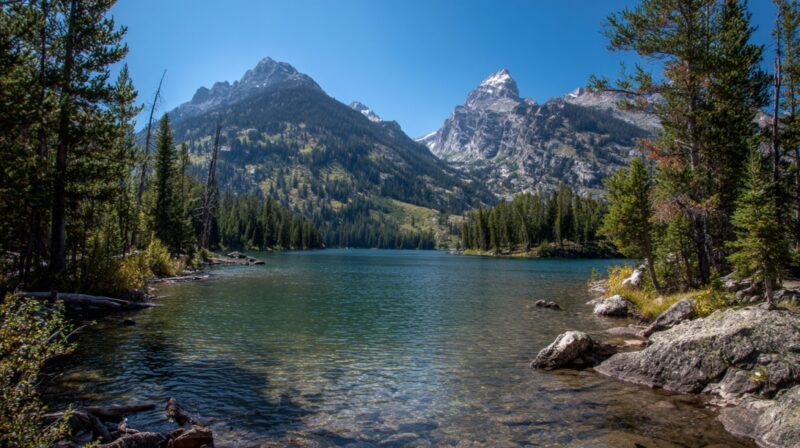
Taggart Lake Trail ranks among the most popular and scenic beginner hikes inside Grand Teton National Park in Wyoming.
Easy terrain paired with dramatic views creates a strong reward without demanding a full day of effort. Snow-capped peaks rise ahead early in the walk, while a calm alpine lake waits at the end.
First-time hikers, casual visitors, and photographers often choose this route due to its approachable nature and consistently impressive scenery.
Wildlife sightings remain possible along the way, adding extra excitement to a short outing.
| Trail Detail | Information |
|---|---|
| Distance | 4.8 miles (loop) |
| Elevation Gain | 423 feet |
| Difficulty | Easy |
| Estimated Time | 1.5 to 2 hours |
| Trail Type | Loop |
| Trailhead Elevation | Approximately 6,625 feet |
| Lake Elevation | Approximately 7,200 feet |
| Best For | Beginners, families, casual hikers, photographers |
| Dog Policy | Not allowed under National Park rules |
| Cell Service | Limited to none, offline maps recommended |
Getting There
Reaching Taggart Lake Trail requires little effort, which adds to its popularity among park visitors. Access stays straightforward for travelers based in Jackson or lodging nearby, and road conditions remain reliable during the main hiking season.
Clear signage along Teton Park Road helps remove guesswork, even for first-time visitors.
Taggart Lake Trailhead sits roughly three miles northwest of Moose, WY, along Teton Park Road. Jackson, WY, is about a 20-minute drive away, allowing easy access early in the morning or later in the afternoon.
Parking deserves advance thought during peak summer months, as demand often exceeds supply by mid-morning. Crowds increase quickly, especially on clear days with good weather.
- Arrivals before 7:00 AM, when lots still hold open spaces
- Late-day visits after 3:00 PM, once earlier hikers begin leaving
- Awareness that Bradley Lake hikers share the same lot, which creates steady vehicle turnover
How does the Trail look?
A steady progression unfolds along Taggart Lake Trail, offering changing scenery without sudden difficulty spikes.
Terrain transitions occur gradually, keeping effort manageable while visual interest builds with each section of the loop. Pace stays relaxed for most hikers, allowing time to absorb views and notice subtle shifts in vegetation and elevation.
Trailhead to Meadows
Opening steps follow a flat, well-maintained path across wide sagebrush meadows. Mountain views appear almost immediately, creating a strong first impression within minutes.
Open space dominates this portion, with little tree cover to block sunlight. Midday heat can feel stronger here than in later sections, so preparation becomes important early on.
- Sunscreen due to limited shade
- Sufficient water, even during cooler mornings
Wildlife sightings remain possible in these open areas, especially during quieter hours, so steady awareness adds value without increasing difficulty.
Entering Aspen and Conifer Forests
Gradual elevation gain begins as the route moves into groves of quaking aspens mixed with conifer forest. Shade increases noticeably, offering welcome relief after the exposed meadow walk.
Ground conditions remain friendly, though scattered rocks and roots appear more frequently. Walking rhythm may slow slightly, yet overall effort stays comfortable for most fitness levels.
Trail markers appear at key junctions, keeping navigation stress-free. Forest sounds replace open meadow quiet, and the temperature often drops a few degrees, making this section feel cooler and calmer.
Glacial Moraine and Final Climb
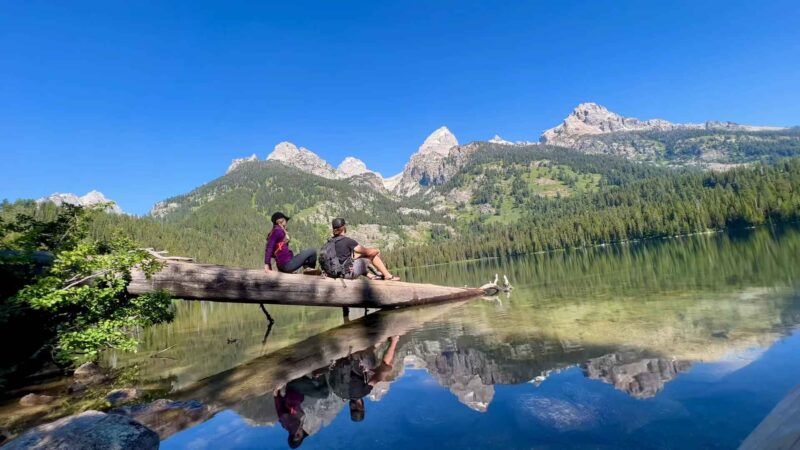
Short climbs emerge through a moraine field shaped by ancient glaciers. Effort increases briefly, though distances remain short and achievable without frequent stops. Uneven rocks require attention to footing, especially after rain or during busy periods when passing others.
- Cooler air as trees thin out
- Sounds of water growing louder near the lake
Anticipation builds quickly during this portion, as glimpses of light through trees hint at the open shoreline ahead.
Arriving at Taggart Lake
Clear water comes into view at the base of towering peaks, creating a dramatic payoff after the final stretch of trail. Calm days often bring smooth reflections across the surface, making this area especially popular with photographers.
Space along the shoreline allows hikers to spread out comfortably rather than gather in one tight area, even during busy periods.
Flat rocks and small clearings line much of the shore, offering natural seating options for rest and observation. Many visitors slow their pace here, taking time to enjoy the quiet atmosphere and cooler temperatures near the water.
Breezes drifting across the lake can feel refreshing after the exposed meadow sections earlier on the hike.
Bears across Jackson Hole are emerging from their winter dens. As bears become active this spring, Bear Wise Jackson Hole partners remind residents and visitors to secure attractants of any kind and be bear aware. Continue reading at https://t.co/7QAswL1U92 pic.twitter.com/fzIQQXItoW
— Grand Teton National Park (@GrandTetonNPS) April 26, 2024
- Picnic breaks along flat rock edges with unobstructed views
- Quiet relaxation near the water, often paired with photography or journaling
- Quick swims for those prepared for cold temperatures, even during summer
Lingering feels tempting due to the peaceful setting, yet cool air and changing mountain weather often encourage layered clothing. Short stays can easily turn longer, so planning extra time helps avoid feeling rushed on the return walk.
Seasonal Notes and Weather
View this post on Instagram
Timing plays a major role in the overall experience along the Taggart Lake Trail, as conditions shift noticeably across the year. Late spring through early fall offers the most reliable access, usually spanning June through September.
Snowmelt during late spring can leave sections damp or muddy, yet trail conditions improve quickly as temperatures stabilize. Wildflowers often appear during this period, adding color to meadow and forest sections.
Summer brings the most consistent weather and dry trail surfaces, making footing easier for hikers of all experience levels. Clear skies frequently provide uninterrupted mountain views, though popularity peaks during these months.
Busy conditions affect both parking availability and trail flow, especially between mid-morning and early afternoon. Heat exposure becomes more noticeable during open meadow sections, so hydration and sun protection remain important even on shorter outings.
Winter snow frequently covers the route, shifting activity away from hiking and toward snowshoe outings.
Deep snow obscures trail features and requires proper winter gear, navigation skills, and awareness of colder temperatures. Short daylight hours also limit flexibility, making winter visits better suited for experienced outdoor enthusiasts.
Afternoon thunderstorms occur often during summer months and can develop quickly with little warning. Earlier start times reduce exposure to lightning and heavy rain while also improving overall comfort.
Morning conditions usually feel cooler and calmer, offering smoother hiking conditions and quieter surroundings during warmer weeks.
Final Thoughts
First visits to Grand Teton National Park often include the Taggart Lake Trail due to its easy access and rewarding views. Families, casual adventurers, and photographers gain classic mountain scenery without tackling strenuous terrain.
Crowds remain part of the experience, yet scenery per mile remains among the best available anywhere in the park.
- Read more: What is the difference between the Rocky Mountains and the Alps?

Hello, my name is Harper Barton. The only thing I love more than travelling is writing about it. Sounds strange doesn’t it? But yeah, I adore writing and sharing my experiences about what I have experienced during my travels. Since I am a person who loves being a part of the community, I often write about local festivals with the goal of popularizing outside just small communities they come from.