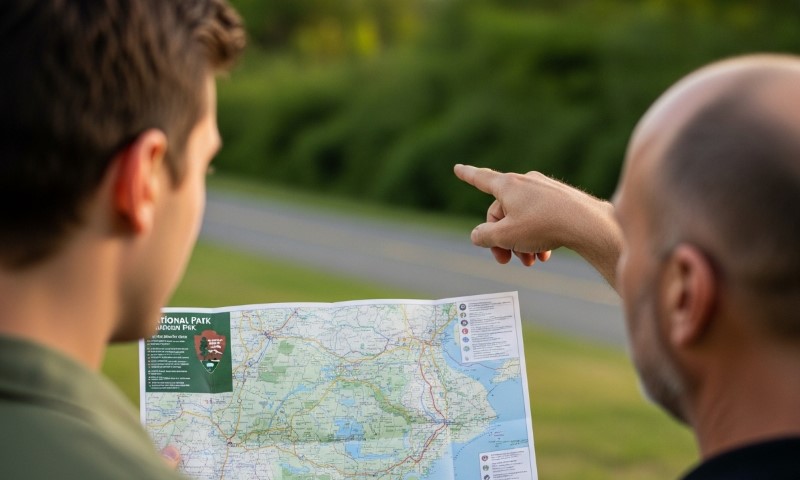
Yes, in many cases they do, but the real answer is a little more specific than a simple yes or no. If an individual guide is taking paying clients into a U.S. national park, that usually counts as a commercial activity, and the National Park Service generally requires a Commercial Use Authorization, often called a CUA.
That is the main permit structure parks use for guided tours, hikes, photography instruction, boating trips, and similar paid visitor services. The important detail is that rules are set park by park, so one guide cannot assume that a permit or process used in Yellowstone will work the same way in Zion, Joshua Tree, or the Everglades.
This matters because a lot of new guides think “registration” means a quick sign-up form or a badge at the gate. In reality, the requirement is often a business permit, not just a name on a list.
The National Park Service states that a CUA is required when a person or business provides goods, services, activities, or other functions for park visitors, when those services take place at least partly on NPS land or use park resources, and when the guide receives compensation, monetary gain, benefit, or profit.
What Counts As “Registering” With A National Park?
For individual tour guides, “registering” can mean several different things depending on the park. In many parks, the core requirement is obtaining a CUA before offering paid services. In others, CUA is only the first step, and the guide may also need to submit employee names, certifications, trip forms, or guide information before each trip or season.
Yellowstone, for example, requires CUA holders to submit guide names through its Guide List Form, and guides are authorized to operate once those names are submitted. Zion goes even further for some activities by requiring guides to complete a commercial use form before every trip for certain guided hiking, bicycle, and photography activities.
So the short version is this: individual guides often do need to register in some form, but the real requirement is usually commercial authorization plus park-specific operating compliance.
If You Are An Independent Guide, You May Still Apply Yourself
A common misunderstanding is that only large tour companies can get these permits. That is not what the NPS says. Several park and NPS pages describe a CUA as a permit that can be issued to an individual, group, company, or other for-profit entity. In other words, a solo guide can often apply directly, as long as the service is one the park allows and the guide meets the park’s conditions.
That distinction matters for small operators. If you are a single hiking guide, photography guide, wildlife guide, or road-based interpretive guide, the issue is not whether you are “big enough.” The issue is whether the park allows that service category and whether you have the required authorization, insurance, certifications, and operating plan.
The Park, The Activity, And The Way You Get Paid All Matter
Whether you need authorization depends on three practical questions.
First, are you getting paid, directly or indirectly, for guiding or arranging part of the experience? If yes, you are much more likely to fall under commercial rules. Second, does any part of the service take place on National Park Service land or use park resources? Third, is the park open to that kind of commercial activity at all?
Some parks issue CUAs for broad categories of visitor services, while others tightly limit the types of guiding they will permit. Everglades, for example, states plainly that businesses must apply for and receive a CUA to legally provide commercial services within the park, and that qualifications vary by service type. Yellowstone lists multiple service-based CUAs and makes clear that it issues them by activity category.
That means there is no single national answer that covers every guide and every park. The national framework exists, but park-level conditions decide the details.
In Some Parks, A CUA Is Not The Only Requirement
This is where many guides get tripped up. Even after getting a CUA, there may be extra requirements for individual guides or staff members. NPS CUA terms and conditions explain that park-specific conditions can include limits on locations, times, group size, employee licenses, and employee certifications, with those details sometimes requiring superintendent approval.
Joshua Tree, for example, says all guides operating in the park are required to have a park-issued guide card, with a separate fee per card. Yellowstone requires guide names to be submitted. Zion requires recurring trip-entry forms for certain types of guiding.
When A Guide Probably Does Not Need Commercial Registration

If someone is simply showing friends or family around a park and is not being paid, that is generally not the same thing as running a commercial guide service. The NPS CUA framework is tied to compensation, benefits, or profit. So, unpaid personal trips are different from operating a paid guided experience sold to clients.
That said, even non-commercial groups can still run into other rules involving group size, backcountry permits, transportation limits, boating permissions, or activity restrictions. So “not commercial” does not automatically mean “no rules.” It only means you may not need the commercial authorization piece.
Why This Matters For Travel Professionals
This issue comes up more often now because more people are trying to turn destination knowledge into a business. A travel professional may start by planning itineraries, then move into escorted trips, step-on guiding, or specialty experiences in national parks. That is where people can accidentally cross from trip planning into regulated park operations.
That is also why the business side matters. Like Yeti Travel, that positions itself as a host agency for travel advisors, offering training, support, CRM tools, commission systems, and work-from-home flexibility for people building travel businesses.
That kind of structure can help someone learn the travel-industry side of selling and managing client experiences. But it does not replace park authorization. If a travel advisor or independent guide starts offering paid services inside a national park, they still need to follow the park’s own commercial rules, permit process, and guide requirements.
That is an important line. A host agency can support the business, but the national park controls the on-the-ground authorization.
A Simple Breakdown
| Situation | Likely Requirement |
| You guide paying clients inside a national park | Usually, a CUA or equivalent park commercial authorization is required |
| You are an independent solo guide | You may often apply as an individual if the park allows the activity |
| You already have a CUA | You may still need guide cards, trip forms, submitted guide names, or certifications |
| You are unpaid and just traveling with friends or family | Usually not a commercial registration issue, though other park rules may still apply |
| You operate in multiple parks | You usually need to check each park separately because requirements vary |
The Biggest Mistake Individual Guides Make
The most common mistake is assuming the national parks system works like a single permit office. It does not. The National Park Service has a shared CUA structure, but parks apply it through their own service categories, conditions, fees, deadlines, and operational rules.
One park may allow a certain guided activity with a straightforward application. Another may require more certifications, daily forms, guide cards, or tighter operating limits.
The second mistake is assuming that because the guide is “just one person,” the rules do not apply. The rules can absolutely apply to a single individual if that person is running a for-profit service in the park.
Final Answer
Individual tour guides often need to register with national parks in the United States, but in practice, that usually means getting a Commercial Use Authorization and then following any additional park-specific rules for guides, staff, certifications, trip forms, or guide cards.
If you are charging clients for tours inside a national park, you should assume you need to check the park’s commercial services rules before operating.
The safest assumption is not “I’m just a small guide.” The safest assumption is “if I am earning money in the park, I probably need authorization.”

Hello, my name is Harper Barton. The only thing I love more than travelling is writing about it. Sounds strange doesn’t it? But yeah, I adore writing and sharing my experiences about what I have experienced during my travels. Since I am a person who loves being a part of the community, I often write about local festivals with the goal of popularizing outside just small communities they come from.