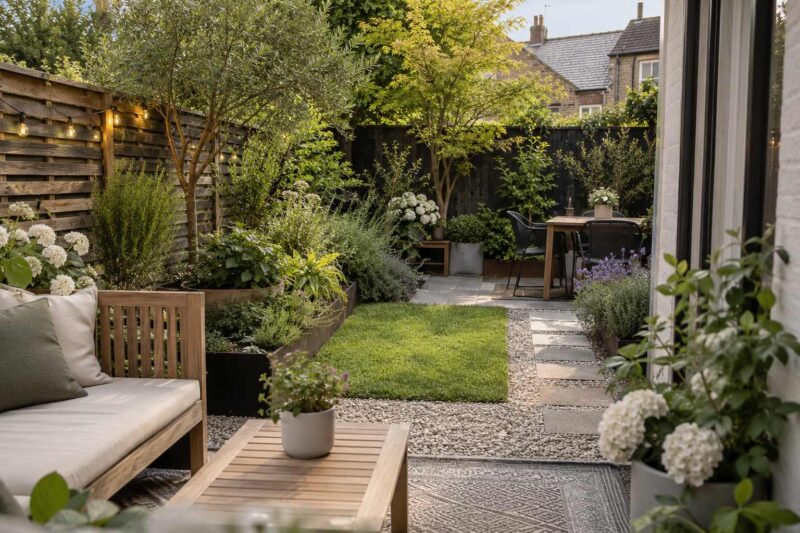
A small backyard can fit more than a patch of grass and two flowerpots. There may be room for a vegetable bed, a comfortable place to sit, climbing flowers and even a small tree. The problem usually starts when everything is placed in the middle, leaving narrow strips of unused ground around the edges.
A better approach is to use the boundaries for planting, keep walkways clear and choose plants that will still fit when fully grown. Here are 12 ideas that work in small backyards, including narrow gardens, paved yards and spaces with very little sunlight.
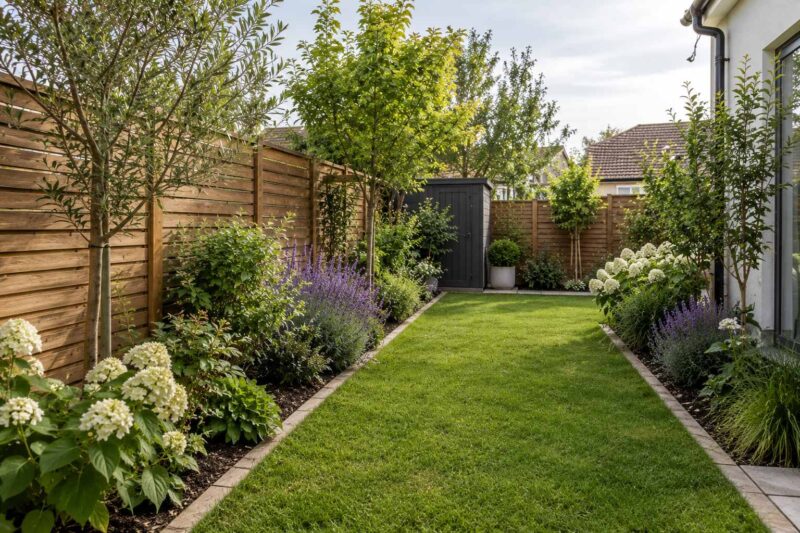
1. Plant Along the Fence Instead of the Middle of the Lawn
For a backyard measuring 15 by 20 feet, planting beds down both sides can leave a useful open area in the center.
Keep the beds narrow, particularly if they are only accessible from one side. A width of 18 to 24 inches works for many small plants and makes weeding easier.
Try lavender, dwarf ornamental grasses or compact flowering shrubs suited to your climate. Avoid large shrubs that will eventually spread across the lawn or press against the fence.
For a natural appearance, repeat a few plant varieties rather than buying one of everything at the garden center.
2. Grow Flowers and Vegetables Up a Trellis
A trellis lets climbing plants grow upward instead of spreading across the ground.
Climbing roses, clematis and sweet peas can create a flowering wall. For edible gardening, pole beans and cucumbers are useful choices in sunny locations.
Install the support before planting so you do not disturb established roots later.
Choose a sturdy frame and secure it properly. A trellis covered with mature plants can become surprisingly heavy, especially after rain.
3. Replace One Corner of Grass With a Small Seating Area
You do not need a large patio to enjoy coffee outside. A pair of chairs and a small round table can fit into a corner without taking over the garden.
Measure the furniture before preparing the ground. A space of 6 by 8 feet can accommodate a compact arrangement for two, depending on chair size and clearance.
Choose a stable surface such as paving stones or a properly prepared gravel area. Furniture left on grass throughout the summer can create bare patches and muddy spots.
The same principle of making limited space more functional applies to modernizing a small cabin, where furniture placement and thoughtful design can improve comfort without major renovations.
Place the seating area where you naturally get sun or shade at the time of day you use the garden. A corner that looks sunny in the morning may be completely shaded by late afternoon.
4. Use Raised Beds for Vegetables and Herbs
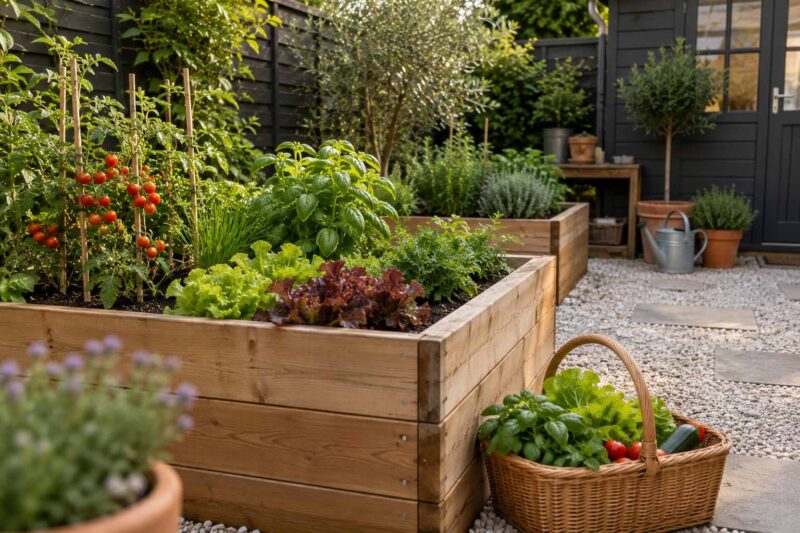
A single raised bed can produce salad greens, radishes, herbs and other small crops without turning the entire backyard into a vegetable garden.
A 4-by-4-foot bed is a useful starting size when you can reach it from all sides. If it sits against a wall or fence, reduce the width so you can reach the back without stepping into the soil.
Beds should not be wider than 3 to 4 feet when accessible from both sides, or 2 to 2.5 feet when accessible from only one side.
For a small edible garden, plant according to the season. Lettuce and radishes suit cooler growing periods, while tomatoes and peppers need more warmth and sunlight.
Keep the bed close to a water source. Carrying watering cans across the garden every day becomes tiring surprisingly quickly.
5. Make the Boundary Fence Part of the Garden Design
A worn fence can make even a carefully planted backyard look neglected. Before replacing it, check if cleaning, repainting or repairing damaged sections will restore its appearance.
If replacement is necessary, consider the height and colour alongside your planting plan. Dark finishes can create a useful background for green foliage, while pale fencing can brighten a shaded space.
Timber, metal and composite fencing offer different maintenance requirements, so compare durability, installation costs and local boundary rules before choosing new panels.
Keep the planting beds a suitable distance from the structure. Dense shrubs pressed against timber can trap moisture and make repairs difficult.
If the backyard belongs to a property that stays empty for long periods, regular vegetation checks should also be part of your seasonal property maintenance routine.
For extra privacy, use climbing plants on a separate support where the fence itself cannot safely carry their weight.
6. Choose a Small Tree Instead of Several Large Shrubs
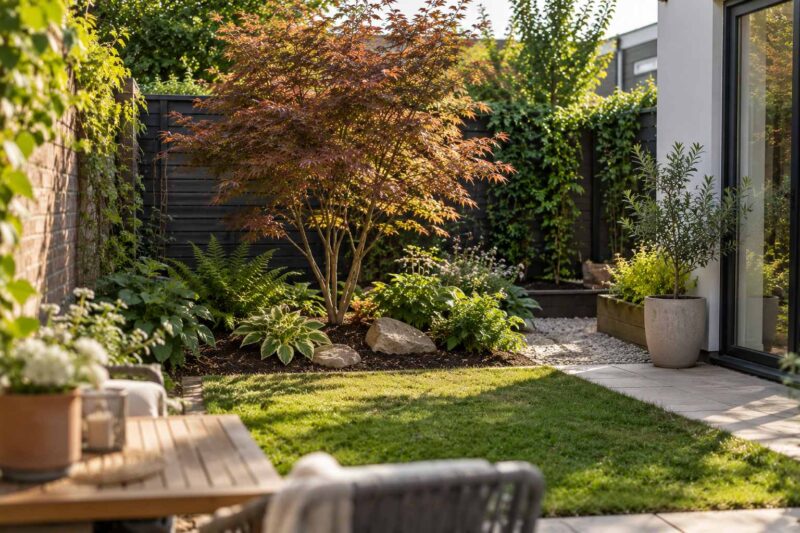
One carefully positioned tree can provide shade, flowers and autumn colour without filling the backyard with separate plants.
Choose a species based on its mature height and width, not how small it looks at the nursery.
Compact varieties of Japanese maple, serviceberry or crabapple may suit certain small gardens, depending on climate and growing conditions.
Check the expected root spread and distance from buildings, underground pipes and paved areas. A tree that grows too close to the house can create expensive maintenance problems later.
Avoid planting directly beneath overhead power lines unless the mature tree height is suitable.
7. Turn a Bare Wall Into a Vertical Herb Garden
A sunny wall beside the kitchen door can hold several pots of herbs without using valuable ground space.
Use individual wall-mounted containers or a suitable vertical planter. Parsley, chives, thyme and basil are useful choices, although their growing seasons and sunlight needs vary.
Each container needs drainage. Water collecting around roots can cause problems, especially in small pots.
Use fixings suitable for the wall and the combined weight of wet soil, containers and mature plants. Avoid attaching heavy planters to weak siding.
8. Replace a Wide Garden Path With Stepping Stones
A solid paved path can consume a surprising amount of space in a narrow backyard.
If the route is only used for walking between the house and a seating area, individual stepping stones may leave more ground available for planting.
Lay the stones along the route people actually walk. Test the spacing before installing them so nobody has to stretch their stride.
Set each stone on a prepared, stable base and keep the top reasonably level with the surrounding ground. Uneven or raised edges can create trip hazards.
Where wheelchair, stroller or wheeled equipment access is needed, a continuous firm path is more suitable than separated stones.
9. Use Large Planters Instead of Dozens of Small Pots
Ten small pots scattered around a patio can make the space look crowded and leave little room to walk.
Two or three larger containers create a cleaner planting arrangement and provide more soil for roots.
Try a tall ornamental grass in one planter and flowering plants in another. For edible planting, a sufficiently large container can support a compact tomato variety or several herbs.
Check drainage and water requirements before buying. Large containers are heavy when filled, so position them before adding soil.
For a rented property, movable planters are useful because they do not require digging up the garden.
10. Build a Narrow Bench With Storage Underneath
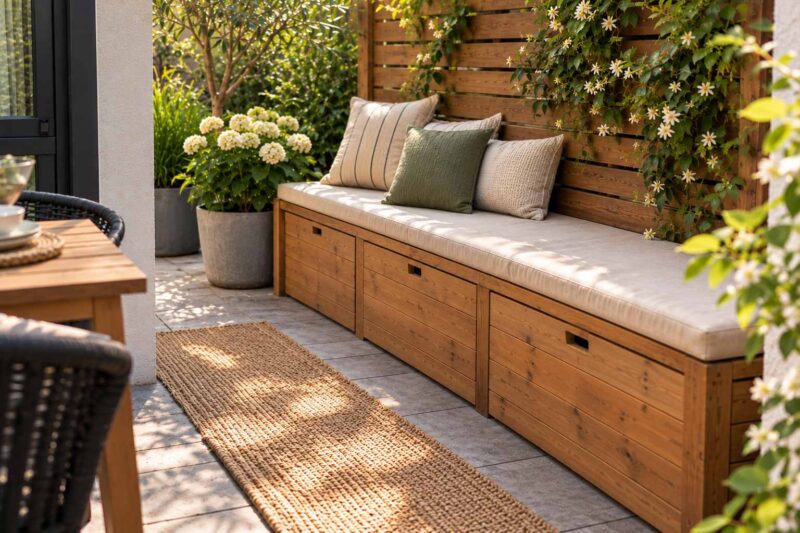
A bench against a wall can provide seating without the clearance needed for several individual chairs.
In a small backyard, a bench measuring 4 to 5 feet long may seat two adults comfortably, depending on the design.
Choose outdoor-rated materials and a sturdy structure. If the bench includes storage, allow for drainage and ventilation so cushions and gardening supplies do not sit in trapped moisture.
A small table can be moved in front of the bench when needed and stored elsewhere afterward.
For a built-in bench, check that it does not block wall vents, drainage outlets or access to outdoor utilities.
11. Plant for More Than One Season
A backyard filled entirely with summer flowers can look bare for much of the year.
Choose a few plants that provide interest at different times. Spring bulbs can flower before many perennials begin growing, while selected shrubs provide foliage or berries later in the season.
Evergreen plants can keep some structure in the garden through winter, but choose compact varieties that will not overgrow the available space.
For a sunny backyard, combine flowering perennials with ornamental grasses and a small evergreen shrub.
In shade, hostas, ferns and suitable woodland plants can create attractive foliage without relying on flowers.
Check local growing conditions before choosing species. A plant that performs well in one region may struggle with the heat, frost or soil in another.
12. Leave Some Open Space Instead of Filling Every Corner
A small garden becomes harder to use when every section contains furniture, containers or planting beds.
Keep an open area where children can play, a dog can move around or you can place an extra chair when friends visit.
For very small yards, that might mean a simple gravel area surrounded by planting rather than a traditional lawn.
If you prefer grass, use a suitable lawn variety and keep the surrounding beds narrow enough to leave a useful central space.
Measure the garden before buying more plants. Fully grown shrubs and trees will take up far more room than they do on the day you plant them.
How to Arrange a Small Backyard Without Wasting Space
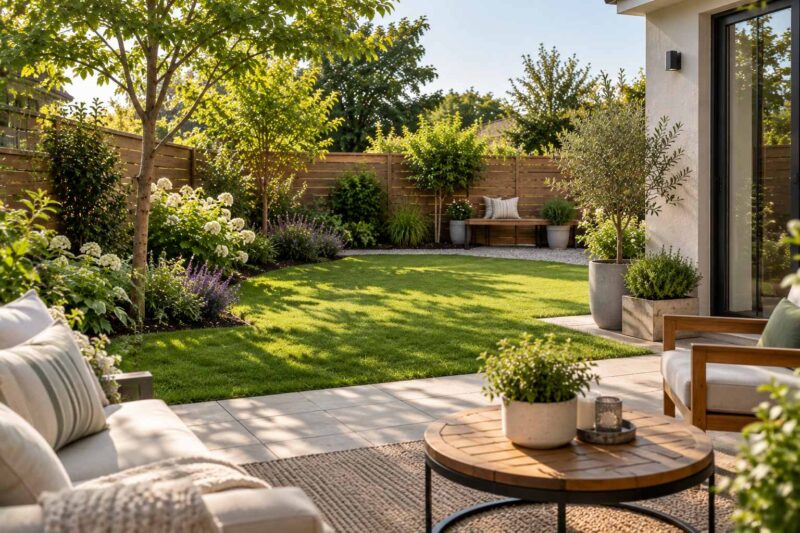
For a backyard measuring 15 by 20 feet, a simple layout might include the following areas.
| Area | Suggested Arrangement |
| One rear corner | 6-by-8-foot seating area for two |
| Along one fence | Narrow flower bed with climbing plants |
| Near the kitchen door | Vertical herb planters |
| Sunny corner | 4-by-4-foot raised vegetable bed |
| Center | Open lawn or gravel area |
| Route from the house | Stepping stones or a firm path |
Before building anything, mark the proposed areas with string, pots or garden furniture. Walk around the space and check access to the shed, tap and gates.
Leave enough room to maintain the plants. A flower bed that looks attractive from the house will quickly become frustrating if you cannot reach the back to remove weeds.
Beds should be at 18 to 24 inches for comfortable access between beds, with wider paths for wheelbarrows and similar equipment.
Small Backyard Improvements That Are Worth Doing First
Start with jobs that solve a problem you already have. If the garden feels exposed, address privacy. If the lawn turns muddy where everyone walks, install a stable path. Where flowers struggle, check the sunlight and soil before replacing them.
Save expensive structures for later. A few containers, a narrow planting bed and a comfortable bench can make a noticeable improvement without rebuilding the backyard.
The most successful small gardens give plants enough room to grow and people enough room to move. Choose fewer, suitable features rather than trying to squeeze every garden idea into the same limited space.

Hello, my name is Harper Barton. The only thing I love more than travelling is writing about it. Sounds strange doesn’t it? But yeah, I adore writing and sharing my experiences about what I have experienced during my travels. Since I am a person who loves being a part of the community, I often write about local festivals with the goal of popularizing outside just small communities they come from.